
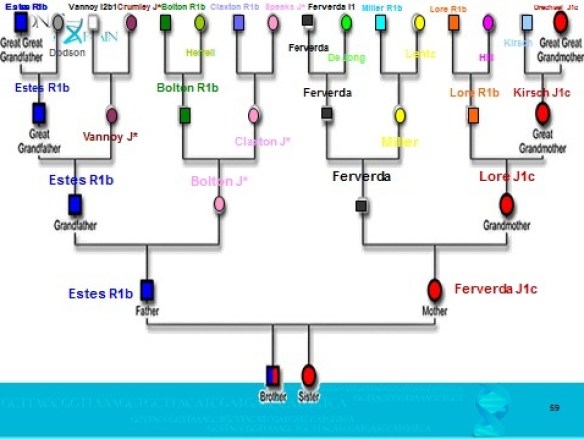
Y-37 DNA Test: What It Is and What It Can Tell You
A Y-37 DNA test is a genealogical test that examines 37 markers on the Y chromosome. Because the Y chromosome is generally passed from father to son, the test can help explore a person’s direct paternal line—the line connecting a father to his father, and so on through earlier generations.
Y-37 is commonly used in genetic genealogy to compare paternal-line results with those of other people. It can offer clues about shared ancestry, help investigate a surname or family line, and provide a starting point for more advanced Y-DNA research.
How Y-DNA Testing Works
The Y chromosome is typically inherited by sons from their biological fathers. Across generations, it changes gradually through small genetic variations. A Y-DNA test looks at selected locations on the chromosome and records the results as a profile.
The “37” in Y-37 refers to the number of tested markers. These markers are short tandem repeats, or STRs, which are sections of DNA that can vary in the number of repeated units. People with similar results may share a paternal-line ancestor, although the test alone cannot identify exactly who that ancestor was or when they lived.
Who Can Take a Y-37 Test?
Since the test examines the Y chromosome, it is generally taken by someone who has one—usually a man. A woman interested in her direct paternal line may ask a father, brother, paternal uncle, or another suitable male relative from that line to test. The best person to test depends on which branch of the family is being researched.
Y-DNA follows only one narrow branch of a family tree: the direct father-to-son line. It does not represent all of a person’s ancestry. For a broader view of genetic relatives across multiple family lines, an autosomal DNA test may be more appropriate.
What Can a Y-37 Test Reveal?
- Potential paternal-line matches: The results can be compared with other testers to identify people whose Y-DNA profiles are similar.
- Clues about a shared ancestor: The number and pattern of differences between two profiles can help estimate whether a shared paternal ancestor may be relatively recent or more distant. These estimates are probabilities, not exact dates.
- Help with surname research: Y-DNA can be useful when investigating a surname that is traditionally passed from father to son, or when records are incomplete or conflicting.
- Haplogroup information: A test may provide a broad haplogroup estimate or related classification. More detailed testing may be needed to identify a precise branch.
What a Y-37 Test Cannot Tell You
A Y-37 result is not a complete family history. It does not reveal every ancestral line, establish a legal relationship, or prove the identity of a particular ancestor by itself. A close match can point to a shared paternal-line connection, but documentary research and family context are needed to interpret it.
Y-37 is also not the same as an ethnicity estimate. Since it follows just one direct paternal line, it cannot describe a person’s overall ethnic or geographic ancestry. The test may provide historical or population-related context, but those clues should not be treated as a precise account of where all of a person’s ancestors lived.
Y-37 Compared With Higher-Level Y-DNA Tests
A 37-marker test can be a useful entry point for paternal-line research, especially when the goal is to find potential matches or explore a surname project. However, people with similar 37-marker results may need additional testing to determine how closely their paternal lines are related.
Higher-level Y-DNA testing may examine more STR markers or analyze specific genetic variants called single-nucleotide polymorphisms, or SNPs. More detailed results can help refine a haplogroup and distinguish branches that look similar at a lower testing level. Whether an upgrade is worthwhile depends on the research question, available matches, and budget.
How to Get the Most From Your Results
- Choose the right tester. Confirm that the person tested represents the exact father-to-son line you want to investigate.
- Build a documented family tree. Names, dates, places, and reliable records make DNA matches easier to evaluate.
- Review matches carefully. Compare genetic results alongside surnames, locations, and family histories rather than relying on a match alone.
- Consider privacy. Read the testing provider’s policies on data storage, matching, sharing, and deletion before submitting a sample.
- Use additional evidence. Combine DNA findings with historical records and, where appropriate, results from other relatives.
Is a Y-37 DNA Test Right for You?
A Y-37 test may be a good choice if you want to investigate a direct paternal line, look for genetic matches, or begin researching a surname or family branch. It is less suitable if your main goal is a broad ethnicity estimate or a picture of ancestry from all sides of your family.
Before ordering, check the testing provider’s current description of the test, the types of matches it supports, and any options for additional analysis. Used thoughtfully alongside family records, Y-37 testing can provide a useful new lead in genealogical research—but it is best understood as one piece of a larger puzzle.
Y-37 DNA Test FAQs: Paternal Ancestry, Accuracy, and Genealogy Value
- What is a Y-37 DNA test?
- Who can take a Y-37 DNA test?
- What can a Y-37 DNA test tell me about my paternal ancestry?
- How accurate are Y-37 DNA matches?
- Can a Y-37 test identify a specific ancestor or prove paternity?
- How is Y-37 different from other Y-DNA tests, such as Y-111 or Big Y?
- Is a Y-37 DNA test worth it for genealogy research?
What is a Y-37 DNA test?
A Y-37 DNA test examines 37 genetic markers on the Y chromosome, which is typically passed from father to son. It can help people explore their direct paternal line by comparing results with others to find potential matches and clues about a shared paternal ancestor. Because it follows only one branch of a family tree, it does not represent a person’s full ancestry, and matches are leads for further research—not proof of a specific relationship on their own.
Who can take a Y-37 DNA test?
A Y-37 DNA test is generally taken by someone with a Y chromosome, typically a biological male, because it examines markers on the Y chromosome that are passed along the direct father-to-son line. If you don’t have a Y chromosome but want to research your paternal ancestry, a suitable male relative—such as your father, brother, paternal uncle, or a male cousin from the same direct paternal line—may be able to test. The right person depends on which branch of the family you want to investigate.
What can a Y-37 DNA test tell me about my paternal ancestry?
A Y-37 DNA test examines 37 markers on the Y chromosome, which is typically passed from father to son, so it can help you explore your direct paternal line. By comparing your results with those of other testers, you may find paternal-line matches and clues to a shared ancestor, or gain leads for researching a surname or family branch. The test follows only one line of your family tree and cannot identify a specific ancestor or exact relationship on its own; records and additional research are needed to interpret the results.
How accurate are Y-37 DNA matches?
Y-37 DNA matches accurately show how closely two tested Y-chromosome profiles compare across 37 markers, but they cannot confirm an exact relationship or identify a specific shared ancestor on their own. A closer match generally suggests a more recent shared paternal-line ancestor, while the estimated relationship timeframe is probabilistic and can vary. For the strongest interpretation, consider the genetic distance alongside family trees, surnames, historical records, and, if needed, higher-resolution Y-DNA testing.
Can a Y-37 test identify a specific ancestor or prove paternity?
A Y-37 test cannot identify a specific ancestor or prove paternity on its own. It compares 37 markers on the Y chromosome to help identify potential matches along a direct paternal line, but a match only suggests a possible shared paternal ancestor; it does not name that person or establish exactly when the connection occurred. Y-DNA results are also not a substitute for a legal or relationship-focused paternity test. For questions about biological parentage, use an appropriate paternity test and consult a qualified professional about testing and legal requirements.
How is Y-37 different from other Y-DNA tests, such as Y-111 or Big Y?
Y-37, Y-111, and Big Y differ mainly in how much of the Y chromosome they analyze and the level of detail they provide. Y-37 compares 37 STR markers, making it a more basic, often lower-cost option for finding potential paternal-line matches and beginning family-history research. Y-111 tests 111 STR markers, which can help distinguish closer paternal-line relationships more precisely. Big Y analyzes a much larger portion of the Y chromosome, including many SNPs, and can identify a more detailed paternal haplogroup and deeper branches of the family tree. The best choice depends on your research goals, budget, and whether you need an introductory comparison or a more detailed view of your paternal lineage.
Is a Y-37 DNA test worth it for genealogy research?
A Y-37 DNA test can be worthwhile for genealogy research if you want to investigate a direct father-to-son line, compare paternal-line matches, or explore a surname or family branch. Its 37 markers can provide useful leads, but they may not be enough to distinguish closely related paternal lines or pinpoint when a shared ancestor lived. For more detailed comparisons, you may need additional testing, and DNA results are most informative when considered alongside family records and other evidence.