
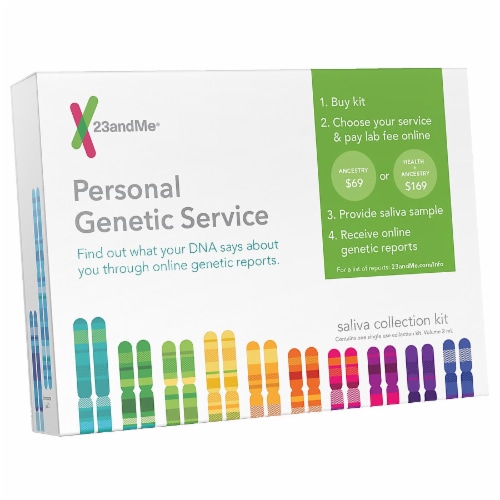
Can You Use 23andMe as a Paternity Test?
If you are trying to confirm whether someone is a child’s biological father, a 23andMe test may seem like a convenient option. However, 23andMe is a direct-to-consumer genetic testing service, not a dedicated paternity-testing service. Its reports and DNA Relative features are designed for ancestry and family connections, not to establish paternity with the certainty or documentation required for legal purposes.
What 23andMe Can Tell You
23andMe analyzes DNA markers and may identify genetic relationships between people who have also tested and chosen to participate in DNA Relative features. A biological parent and child share about half of their autosomal DNA, so a close genetic relationship may be apparent when both people’s results are available.
But identifying a likely relationship through an ancestry service is different from receiving a formal paternity test result. The service is not designed to answer a specific legal paternity question, and its features, reports, and availability may change over time.
Why It Is Not a Substitute for a Paternity Test
- It may not provide a direct paternity conclusion. An ancestry report or relative match is not the same as a test specifically performed to evaluate whether a tested man is a child’s biological father.
- Both people generally need to participate. A relative match depends on the other person testing and, where applicable, enabling the relevant matching features. If they do not participate, the service may not provide a useful comparison.
- It is not intended for legal use. At-home ancestry kits typically do not document identity verification and sample handling in the way a court-admissible test requires.
- Unexpected matches can be difficult to interpret. A result may reveal an unknown relative or family information that people were not expecting. Close relationships can also be confusing when other relatives have tested.
What to Use Instead
For a private answer, contact a reputable laboratory that offers dedicated paternity testing. Ask what samples are needed, how results are interpreted, how the laboratory protects personal information, and whether the test is intended for personal knowledge or legal purposes.
If the result may be used in a court case, child-support matter, birth-certificate issue, or other official process, request a legal paternity test before samples are collected. Legal testing generally requires identity checks and a documented chain of custody. A home collection kit or ancestry test may not meet those requirements, even if it shows a likely biological relationship.
Privacy and Consent
Genetic data is sensitive. Before ordering any DNA test, review the provider’s current privacy policy, data-sharing options, sample-storage practices, and procedures for deleting data or closing an account. Make sure everyone being tested understands what information may be revealed. For children, follow the provider’s consent rules and consider the child’s privacy and well-being.
The Bottom Line
23andMe may help people explore ancestry and discover genetic relatives, but it should not be treated as a formal paternity test. If you need a reliable answer to a specific paternity question—especially for legal purposes—use a dedicated paternity-testing service and confirm in advance that the test meets your needs.
This article is for general informational purposes only and is not legal or medical advice. Testing requirements can vary by situation and jurisdiction.
7 Benefits of Using 23andMe for Paternity Insights and Family Discovery
- Convenient at-home DNA testing
- May reveal a close biological relationship if both people participate
- Can provide useful ancestry context
- Offers a way to explore genetic relatives
- May prompt meaningful family conversations
- Results can be accessed online
- Can complement—but not replace—a dedicated paternity test
5 Reasons to Think Twice About Using 23andMe for Paternity Testing
- Not designed as a formal paternity test.
- May not provide a clear paternity conclusion.
- Both people may need to test and enable matching.
- Results may not be accepted for legal purposes.
- Genetic testing can raise privacy concerns.
Convenient at-home DNA testing
One advantage of using 23andMe is the convenience of collecting a DNA sample at home. Instead of scheduling an appointment at a clinic or laboratory, participants can follow the kit’s instructions, provide a saliva sample, and mail it to the company for processing. This can make testing easier to fit into a busy schedule, though 23andMe is an ancestry service—not a dedicated or court-admissible paternity test.
May reveal a close biological relationship if both people participate
If both people take part, 23andMe may reveal a close biological relationship through shared DNA information. This can offer a convenient starting point for understanding whether two people may be closely related, though an ancestry-service match is not a formal paternity test and should not be relied on for legal purposes.
Can provide useful ancestry context
One potential advantage of using 23andMe while exploring a paternity question is the ancestry context it may provide. Its reports can offer information about genetic ancestry and, when other relatives have also tested and enabled DNA matching, may help reveal family connections that add context to what you already know. However, ancestry results are not a paternity determination; a dedicated paternity test is the better choice when you need a clear answer.
Offers a way to explore genetic relatives
One potential advantage of using 23andMe is the opportunity to explore genetic relatives. If family members have also taken the test and enabled DNA matching, the service may help identify biological connections and provide clues about family relationships. These discoveries can support ancestry research and help people learn more about their family history, though they should not be treated as a formal paternity determination.
May prompt meaningful family conversations
A 23andMe DNA result may prompt meaningful family conversations by giving relatives a new way to explore shared ancestry, family connections, and questions about biological relationships. For some families, those discussions can help clarify family history or open the door to honest conversations that might otherwise be difficult to begin. Because genetic results can also be unexpected or sensitive, it’s best to approach the topic thoughtfully, respect everyone’s privacy, and avoid treating an ancestry result as a formal paternity determination.
Results can be accessed online
One convenience of using 23andMe for genetic testing is that results can be accessed online through your account. This makes it easy to review available reports and genetic relative matches without waiting for a paper copy. Keep in mind, however, that online ancestry results are not a substitute for a dedicated paternity test, especially when an official or court-admissible result is needed.
Can complement—but not replace—a dedicated paternity test
23andMe may complement a dedicated paternity test by offering broader ancestry information and the possibility of discovering genetic relatives who have also chosen to participate in DNA matching. These insights can provide additional family context, but they do not establish paternity with the documentation or procedures needed for a formal result. For a definitive answer—especially one intended for legal use—choose a dedicated paternity test.
Not designed as a formal paternity test.
23andMe is designed primarily for ancestry insights and genetic relative matching, not for formally determining paternity. Its results may suggest a biological relationship, but they are not a substitute for a dedicated paternity test that directly evaluates the relationship between a child and an alleged father. If the result is needed for a court case or another official purpose, use a legal paternity test with identity verification and documented sample handling.
May not provide a clear paternity conclusion.
A key limitation of using 23andMe to investigate paternity is that it may not provide a clear, direct conclusion about whether a specific person is a child’s biological father. The service is designed for ancestry and genetic-relative discovery, so its reports may show a potential family connection without addressing a paternity question or explaining the result in the way a dedicated paternity test would. For a definitive answer, consider a test specifically designed for paternity.
Both people may need to test and enable matching.
One limitation of using 23andMe to explore a possible paternity relationship is that both people may need to submit DNA samples and, where applicable, enable DNA matching features. If the other person has not tested, does not consent to matching, or has restricted their privacy settings, you may not receive a relative match that helps clarify the relationship.
Results may not be accepted for legal purposes.
Results May Not Be Accepted for Legal Purposes
23andMe is designed for ancestry and genetic-relative information, not to establish paternity for court or other official proceedings. Its testing process may not include the identity verification and documented chain of custody that legal paternity testing typically requires. As a result, a 23andMe result may not be accepted for matters such as child support, custody, or updating a birth certificate. If you need a result for legal use, check the requirements with the relevant court or agency and arrange a dedicated legal paternity test through an approved provider.
Genetic testing can raise privacy concerns.
Genetic testing can raise privacy concerns because DNA contains sensitive information about you and your relatives. Before using 23andMe to explore a possible paternity connection, review its current privacy policy and understand how your genetic data and sample may be stored, shared, or used. Consider the privacy preferences of everyone involved, especially a child, and remember that DNA results may reveal unexpected family relationships.