
How to Find the Most Accurate DNA Test
When people search for the most accurate DNA test, they may be looking for answers about family relationships, ancestry, health, or identity. There is no single test that is most accurate for every purpose. The right choice depends on the question being asked, the samples collected, and the laboratory’s methods and quality controls.
Accuracy Depends on the Type of Test
DNA tests are designed for different uses. A test that is well suited to determine whether two people are biologically related may not be the best choice for estimating ancestry or assessing health risks.
- Paternity and relationship testing: These tests compare genetic markers between people to assess whether a biological relationship is supported. Including the child and alleged parent—and, when appropriate, the other biological parent—can provide a more informative comparison.
- Ancestry testing: These tests compare parts of a person’s DNA with reference databases. Results are estimates that may vary between companies as databases and analysis methods change.
- Health-related genetic testing: These tests look for particular variants associated with inherited conditions or health risks. Results may require confirmation and interpretation by a qualified healthcare professional.
- Forensic DNA testing: Forensic analysis is used to compare biological evidence with reference samples. Proper collection, documentation, and handling are especially important when results may be used in a legal matter.
What Makes a DNA Test Reliable?
A reliable result depends on more than the test kit itself. Consider these factors when choosing a provider:
- Laboratory quality: Look for a laboratory with appropriate accreditation and documented quality-control procedures. Requirements vary by test type and location, so ask which standards apply.
- Clear testing methods: The provider should explain what the test can establish, what it cannot establish, and how results are interpreted.
- Proper sample collection: Follow the instructions carefully. Contamination, mislabeled samples, or inadequate material can delay testing or affect whether a usable result is produced.
- Suitable participants: For relationship testing, the people included in the analysis can affect how informative the results are. Ask the laboratory which participants are recommended for the specific question.
- Privacy and consent: Review how samples and genetic information will be stored, used, shared, and eventually disposed of. Make sure all required participants have given informed consent.
Accuracy in Paternity Testing
In paternity testing, results commonly report either an exclusion or a probability of paternity. An exclusion means the tested genetic markers are inconsistent with the alleged biological relationship. A probability of paternity expresses how strongly the results support the relationship compared with an alternative explanation, based on the assumptions used in the analysis.
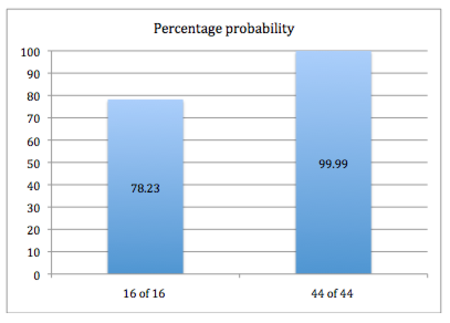
Many properly conducted tests that include the child and alleged father can report a very high probability when the results support paternity. However, no single percentage should be treated as a guarantee without understanding the report, the people tested, and the laboratory’s procedures. If the result may be used for a court, birth record, or other official purpose, ask for a legally documented test with identity verification and a controlled chain of custody. A home test may not meet those requirements.
Accuracy in Ancestry and Health Testing
Ancestry estimates are not exact measurements of a person’s identity. They are comparisons with reference groups, and estimates can differ among providers or change as their databases grow. Close biological relationships may be more directly informative than broad regional percentages, but the report still needs to be understood in context.
Health-related results also have limitations. A test may identify certain genetic variants without predicting whether someone will develop a condition. A negative result does not rule out every possible genetic cause, and a positive result may need confirmation through clinical testing. For medical decisions, discuss results with a healthcare professional or genetic counselor.
How to Choose the Right Test
Before ordering, identify the specific question you need answered. Then contact the provider and ask:
- What type of test is appropriate for this question?
- Which laboratory performs the analysis, and what quality standards does it follow?
- Who should provide samples for the most informative comparison?
- Will the results be accepted for the intended legal or official purpose?
- How are samples and personal data protected?
- What does the report mean, and is help available to interpret it?
The Bottom Line
The most accurate DNA test is the one designed for your specific purpose, performed by a qualified laboratory, and based on properly collected samples. Compare providers carefully, read the limitations, and seek professional guidance when results could affect legal, medical, or family decisions.
Understanding DNA Test Accuracy: Answers to 9 Common Questions
- What is the most accurate DNA test?
- How accurate are DNA paternity tests?
- Which DNA test is most accurate for determining paternity?
- Are at-home DNA tests as accurate as legal DNA tests?
- How accurate are DNA ancestry tests?
- Can DNA test results be wrong?
- What factors affect the accuracy of a DNA test?
- How many people need to be tested for the most accurate paternity results?
- How can I verify that a DNA testing laboratory is reliable?
What is the most accurate DNA test?
The most accurate DNA test depends on what you want to learn. For paternity or other biological relationships, choose a test performed by a qualified laboratory using properly collected samples; if results are needed for court or official purposes, request a legal test with identity verification and a documented chain of custody. Ancestry tests provide estimates that can vary between companies, while health-related tests may require confirmation and professional interpretation. Before choosing, check the lab’s quality standards, privacy policies, and the test’s limitations.
How accurate are DNA paternity tests?
DNA paternity tests are highly accurate when samples are collected and analyzed by a qualified laboratory. If the tested man is the biological father, results commonly show a probability of paternity of 99.9% or higher; if he is not, the test will generally exclude him. Accuracy can depend on who is tested, sample quality, and laboratory procedures. For results needed in court or for official purposes, choose a legal test with verified identities and documented chain of custody, since a home test may not be accepted.
Which DNA test is most accurate for determining paternity?
For determining paternity, choose a DNA test performed by an accredited laboratory that specializes in relationship testing. A test comparing the child’s DNA with the alleged father’s is generally highly informative, and including the child’s biological mother can sometimes strengthen the analysis. If results are needed for court or an official purpose, request a legal test with identity verification and documented chain of custody; a home kit may not meet those requirements. Check the laboratory’s credentials and ask how it reports and explains its findings.
Are at-home DNA tests as accurate as legal DNA tests?
At-home DNA tests can be highly accurate for comparing samples, but they may not meet the requirements of a legal DNA test. Legal testing typically includes verified identification, supervised sample collection, and a documented chain of custody so the results can be tied to the correct people and may be admissible in court. At-home tests usually lack these safeguards, so their results may be useful for personal information but not accepted for official purposes. Check with the court or agency involved before choosing a test.
How accurate are DNA ancestry tests?
DNA ancestry tests can provide useful estimates of your genetic ancestry, but their accuracy depends on the company’s reference database, testing methods, and the populations represented. Results may differ between providers and can change as databases are updated, so ancestry percentages should be viewed as estimates rather than exact measurements of identity or family history. These tests are generally more helpful for identifying close genetic relatives than for pinpointing precise geographic origins.
Can DNA test results be wrong?
Yes, DNA test results can be wrong, though errors are uncommon when testing is performed by a qualified laboratory using properly collected and labeled samples. Mistakes can happen if samples are contaminated or switched, if collection instructions are not followed, or if the test is not designed for the question being asked. Results can also be misunderstood—for example, ancestry estimates are comparisons with reference databases, not definitive measures of identity. If a result is unexpected or may affect a legal or medical decision, contact the testing provider about reviewing the report or arranging confirmatory testing.
What factors affect the accuracy of a DNA test?
DNA test accuracy can depend on the type of test, the quality and amount of the sample, and how carefully it is collected, labeled, and handled. The laboratory’s testing methods, equipment, quality controls, and expertise also matter, as does whether the right people are included for the question being investigated. Contamination, incomplete samples, or a limited reference database can affect results or their interpretation. For legal purposes, identity verification and a documented chain of custody may also be required; ask the testing provider what the test can establish and what limitations apply.
How many people need to be tested for the most accurate paternity results?
For the most informative paternity results, testing usually includes the child, the alleged father, and the child’s mother, when she is available and willing to participate. This three-person test can help clarify which genetic markers came from each parent, but testing the child and alleged father alone is often sufficient for a reliable result. Ask the testing laboratory which participants it recommends, and choose a legally documented test with identity verification and chain of custody if the results are needed for court or official purposes.
How can I verify that a DNA testing laboratory is reliable?
To verify that a DNA testing laboratory is reliable, check whether it holds current accreditation from a recognized organization for the specific type of testing you need, and confirm that the accreditation applies to the laboratory performing the analysis. Ask about its testing methods, quality-control procedures, sample handling, privacy protections, and experience with your kind of test. If results are needed for court or another official purpose, confirm in advance that the laboratory offers identity verification and a documented chain of custody, and that the receiving authority will accept its report. Be cautious of providers that make sweeping guarantees or cannot clearly explain their credentials and limitations.