
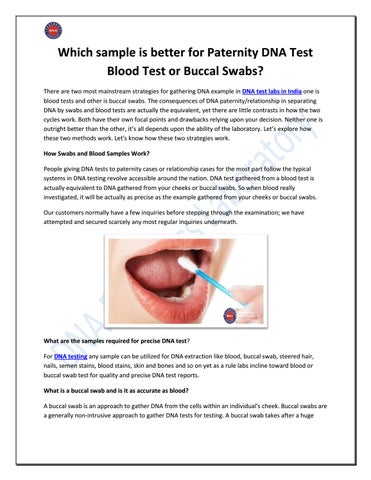
Mouth Swab DNA Test for Paternity: What to Know
A mouth swab DNA test is a common way to determine whether a man is a child’s biological father. It is noninvasive, usually quick to collect, and does not require a blood draw. The test compares genetic markers in samples from the child and the possible father.
How a Mouth Swab Paternity Test Works
A testing kit uses a soft swab to collect cells from the inside of each person’s cheek. The swab collects DNA from those cells. A laboratory analyzes selected genetic markers and compares the results between the child and the alleged father. The child’s biological mother may also provide a sample, although many tests can be performed without one.
Collection is generally simple: the participants rub the swab against the inside of their cheeks as directed by the laboratory. Following the kit’s instructions is important. For example, the lab may ask participants to avoid eating, drinking, smoking, or chewing gum for a short time before collection.
What the Results Can Show
A paternity test usually reports one of two conclusions:
- Excluded: The tested man is not the biological father. A properly conducted test can exclude paternity when the DNA markers do not match in the required way.
- Not excluded: The tested man may be the biological father. The report typically gives a probability of paternity based on the genetic comparison and other relevant assumptions.
When a man is not excluded, results often show a very high probability of paternity, but the exact figure and interpretation depend on the laboratory and the information available. Read the laboratory report carefully and ask the provider to explain any terms or limitations.
At-Home Tests and Legal Tests
An at-home test can help people learn about a biological relationship for personal information. However, a home test may not meet the requirements for establishing or challenging legal paternity. Because participants generally collect and submit their own samples, the results may not document who provided each sample or how it was handled.
A legal paternity test uses identity checks and a documented chain of custody. Samples are collected or witnessed by an authorized professional, labeled and tracked, and sent to a qualified laboratory. If results may be used in court, for child support, or to change a birth record, check the requirements of the relevant court or agency before ordering a test. In Oregon, requirements can depend on the legal issue and the agency involved, so consider getting guidance from a qualified attorney or the appropriate government office.
Choosing a Testing Provider
Before purchasing a test, find out:
- Whether the test is for personal information or can be used for a legal purpose
- How samples are collected and verified
- Which laboratory performs the analysis and whether it holds relevant accreditation
- How results are reported and how long processing takes
- What the total cost includes, including collection, shipping, and any required legal documentation
- How the provider protects, stores, and disposes of genetic samples and information
Consent, Privacy, and Family Considerations
DNA testing can have emotional and legal consequences for everyone involved, especially a child. Before testing, consider how the results may affect family relationships and who will receive the report. Laws and rules about consent—particularly for testing a minor—can vary by situation. Ask the testing provider what consent is required, and seek legal advice if there is uncertainty or disagreement.
Also review the provider’s privacy policy. Ask whether DNA samples are retained, whether genetic information is shared with other organizations, and how to request deletion or destruction of samples where available.
When to Seek Professional Guidance
A mouth swab test can provide useful information, but it does not by itself resolve every legal question about parentage, custody, visitation, or financial responsibility. If the result could affect a court case or a child’s legal status, use a test that meets the applicable legal requirements and consult a qualified professional before making decisions based on the results.
Mouth Swab DNA Paternity Tests: 6 Frequently Asked Questions
- How does a DNA test work?
- Can I get a DNA test without my partner knowing?
- How accurate is a mouth swab paternity test?
- How long does it take for a DNA mouth swab to come back?
- What does a 97% paternity test result mean?
- How long does saliva DNA last on a swab?
How does a DNA test work?
A mouth swab DNA test collects cells from the inside of the child’s and alleged father’s cheeks. A laboratory analyzes genetic markers in each sample and compares them, because a child inherits DNA from both biological parents. The results indicate whether the tested man is excluded as the biological father or is not excluded, usually with a reported probability of paternity. Including the child’s mother’s sample may help clarify the comparison, but it is not always required.
Can I get a DNA test without my partner knowing?
A mouth swab paternity test generally requires each participant’s consent, so secretly collecting or submitting someone else’s DNA may violate the testing provider’s rules or applicable privacy laws, and the results may not be accepted for legal purposes. If a child is involved, consent requirements can depend on who has legal authority to approve testing. Contact a reputable testing provider about its consent and privacy policies, and seek legal advice if you need results for a court or agency.
How accurate is a mouth swab paternity test?
A mouth swab paternity test can be highly accurate when samples are collected correctly and analyzed by a reputable laboratory. If the tested man is the biological father, the report commonly shows a probability of paternity of 99.9% or higher; if he is not the father, testing can typically exclude him. Accuracy depends on factors such as sample quality, the people tested, and the laboratory’s methods. For results intended for court or official use, choose a legal test with identity verification and a documented chain of custody.
How long does it take for a DNA mouth swab to come back?
A mouth-swab paternity test typically takes a few business days to about two weeks after the laboratory receives the samples, though timing varies by provider, shipping method, and whether the test is for personal information or legal use. Some labs offer expedited processing for an additional fee. Check the provider’s estimate to see whether it starts from the date samples are mailed or the date they arrive at the lab.
What does a 97% paternity test result mean?
A 97% paternity result generally means the tested man is not excluded as the child’s biological father, and the DNA comparison supports paternity with a reported probability of 97% under the laboratory’s stated assumptions. It is not a guarantee, and the exact meaning depends on the lab’s methods, the people tested, and how the probability was calculated. Check the report or contact the laboratory for an explanation; if the result may be used for a legal matter, confirm that the test meets the relevant requirements.
How long does saliva DNA last on a swab?
DNA on a mouth swab can remain usable for weeks or longer when it is collected and stored properly, but there is no single shelf life for every swab. Heat, moisture, sunlight, contamination, and the type of collection kit can affect the sample. Follow the kit’s instructions—typically allowing the swab to dry fully and keeping it sealed in its provided packaging—and send it to the laboratory promptly. If a swab has been stored for a long time or exposed to moisture or heat, contact the testing provider to ask whether it can still be tested.