
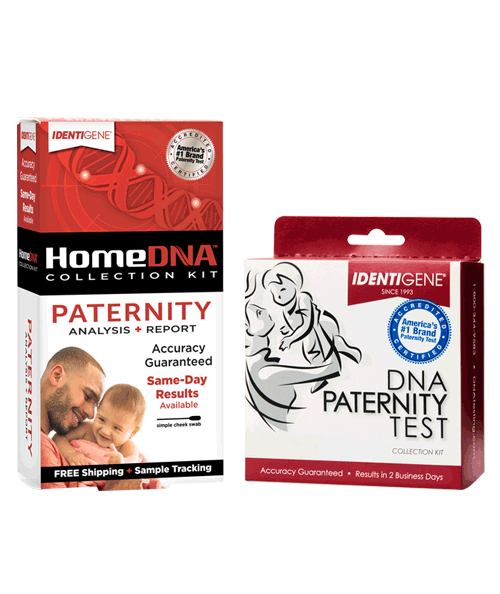
What Is the Most Accurate DNA Test for Paternity?
The most accurate paternity test is one performed by a qualified laboratory using validated DNA analysis and reliable sample-collection procedures. In the United States, look for a laboratory accredited by the American Association of Blood Banks (AABB) for relationship testing. Accreditation helps show that the lab follows established standards for testing, quality control, and reporting.
Many paternity tests are highly accurate, but accuracy depends on more than the laboratory’s advertised percentage. The type of test, the people tested, how samples are collected, and how results will be used all matter.
How DNA paternity testing works
A child inherits half of their DNA from each biological parent. A paternity test compares genetic markers in the child’s DNA with those of the alleged father. Samples are usually collected with cheek swabs, which are sent to a laboratory for analysis.
When the alleged father is not the biological father, a properly conducted test can usually exclude him. When the results are consistent with paternity, the laboratory calculates a paternity index and a combined probability of paternity. Many reports show a probability of 99.9% or higher, but the exact result depends on the tested individuals and the laboratory’s methods.
What to look for in a paternity test
- Laboratory accreditation: Check that the lab is AABB-accredited for relationship testing. Confirm the accreditation directly with the organization or laboratory.
- Validated testing methods: Ask what genetic markers are analyzed and whether the lab uses established methods for paternity testing.
- Clear reporting: The report should explain whether paternity is excluded or supported and provide the relevant probability or statistical findings.
- Proper sample handling: For results that may be used in court or for official purposes, samples should be collected, identified, and tracked under documented procedures.
- Support for unusual cases: Ask how the lab handles situations involving close relatives, an unavailable parent, or other circumstances that could complicate interpretation.
At-home tests versus legal paternity tests
An at-home paternity test may use the same kind of laboratory analysis as a legal test. The key difference is usually how the samples are collected and documented. With a home test, participants generally collect their own cheek swabs and mail them to the lab. The results are typically intended for personal knowledge and may not meet court or agency requirements.
A legal paternity test uses a documented chain of custody. A neutral collector verifies participants’ identities, collects the samples, and records how they are handled. If results may be needed for child support, custody, a birth certificate, immigration, or another official matter, ask the relevant court or agency what testing procedure it requires before ordering a test.
Factors that can affect the results
Testing the child and alleged father is often sufficient, but including the child’s mother may provide additional information in some cases. If the alleged father is unavailable, testing close relatives may sometimes help, though it may not provide the same level of certainty as testing the alleged father directly.
Tell the laboratory if the alleged father has a close male relative who could also be the biological father, such as a brother or identical twin. Close relatives share more DNA than unrelated people, which can make some cases more complex. The lab may recommend additional testing or explain the limits of the analysis.
Occasionally, natural genetic variation can complicate interpretation. A reputable laboratory should review unusual results and explain whether more testing is appropriate. Ask how the lab handles inconclusive or unexpected findings and whether additional analysis may involve extra fees.
What about prenatal paternity testing?
Some laboratories offer noninvasive prenatal paternity testing using a pregnant person’s blood sample and a cheek swab from the alleged father. Availability, eligibility, timing, and methods vary by laboratory. Invasive procedures such as chorionic villus sampling or amniocentesis carry medical considerations and should be discussed with a qualified healthcare professional. A paternity-testing company is not a substitute for medical advice.
How to choose the right test
- Decide whether the result is for personal information or an official legal purpose.
- Verify the laboratory’s accreditation and ask who will perform the analysis.
- Ask how samples are collected, tracked, and protected.
- Review the test’s total cost, including collection, shipping, and any follow-up analysis.
- Read the privacy policy and find out how genetic information and samples are stored or destroyed.
- Ask what the report means and who can help explain it.
The bottom line
For dependable results, choose an AABB-accredited relationship-testing laboratory that explains its methods, provides a clear report, and follows appropriate sample-handling procedures. If the results need to be accepted by a court or government agency, use a legal test with a documented chain of custody and confirm the agency’s requirements in advance.
This article is for general informational purposes and is not legal or medical advice. Requirements and testing options can vary by state, court, agency, and laboratory.
7 Essential Tips for Choosing the Most Accurate DNA Test for Paternity
- Choose an accredited laboratory, such as one accredited by AABB for relationship testing.
- For legal use, request a test with verified identity and documented chain of custody.
- A test including the child, alleged father, and mother may help clarify results.
- Ask the lab how it reports probabilities of paternity and exclusions.
- Use properly collected cheek swabs and follow the lab’s instructions exactly.
- Avoid relying on ancestry or consumer DNA tests for paternity conclusions.
- Have a qualified professional explain any inconclusive or unexpected result.
Choose an accredited laboratory, such as one accredited by AABB for relationship testing.
For the most dependable paternity test results, choose a laboratory accredited for relationship testing by the American Association of Blood Banks (AABB). Accreditation indicates that the lab follows established standards for testing and quality control. Before ordering, verify the lab’s current accreditation and ask whether its test meets your needs—especially if the results may be used for legal or official purposes.
For legal use, request a test with verified identity and documented chain of custody.
For legal use, choose a paternity test that verifies each participant’s identity and documents every step of the sample’s collection, handling, and transfer. This process, called a chain of custody, helps show that the samples belong to the people named in the report and have not been mixed up or tampered with. Before testing, confirm that the court or agency will accept the laboratory and its procedures.
A test including the child, alleged father, and mother may help clarify results.
Including the child, alleged father, and mother in a paternity test can provide the laboratory with additional genetic information and may help clarify the results. The mother’s sample can help identify which DNA markers the child inherited from her, making it easier to assess whether the alleged father could be the biological father. Ask the testing laboratory whether including the mother is recommended for your situation and whether it affects the cost or turnaround time.
Ask the lab how it reports probabilities of paternity and exclusions.
Ask the laboratory how it reports both probabilities of paternity and exclusions before choosing a test. A clear report should explain whether the alleged father is excluded or whether the results support paternity, and describe the statistical findings in plain language. Ask what a reported probability means, what assumptions it relies on, and how the lab handles inconclusive or unusual results so you can understand the findings in context.
Use properly collected cheek swabs and follow the lab’s instructions exactly.
For the most reliable paternity test results, collect cheek-swab samples exactly as the laboratory instructs. Wash your hands, avoid touching the swab tip, and follow any guidance about eating, drinking, or smoking before collection. Make sure each swab is labeled correctly and kept separate to prevent mix-ups or contamination. Even a highly accurate laboratory test can be affected by poorly collected or mislabeled samples.
Avoid relying on ancestry or consumer DNA tests for paternity conclusions.
Avoid relying on ancestry or general consumer DNA tests to determine paternity. These services are designed to estimate ancestry or identify genetic relatives, not to provide a formal paternity finding, and their results may not meet the accuracy, interpretation, or documentation standards needed for personal certainty or legal use. Choose a dedicated paternity test from a qualified laboratory, and if the result is needed for court or another official purpose, confirm the requirements and use a test with documented sample collection and chain of custody.
Have a qualified professional explain any inconclusive or unexpected result.
If a paternity test comes back inconclusive or unexpected, ask a qualified genetic counselor, healthcare professional, or the testing laboratory to explain what the findings mean before making decisions. Results can be affected by sample quality, the people tested, or uncommon genetic factors, and additional testing may sometimes be recommended. A professional can clarify the report, discuss its limitations, and outline appropriate next steps.