
Paternal Ancestry DNA Tests: What They Can Tell You
A paternal ancestry DNA test can offer clues about the history of a person’s father-to-son line. It may identify a Y-chromosome haplogroup, connect a participant with genetic matches, and suggest where that direct paternal line may have originated thousands of years ago.
These tests can be useful for family history research, but they have limits. They do not provide a complete picture of someone’s ancestry, and they are not the same as a legal paternity test. Understanding what a test measures—and what it cannot establish—can help you decide whether it fits your goals.
What Is a Paternal Ancestry DNA Test?
The term “paternal ancestry test” can refer to more than one type of DNA test. The most direct test of the father-to-son line analyzes the Y chromosome. Most people who inherit a Y chromosome receive it from their biological father, who inherited it from his biological father, and so on.
Because the Y chromosome generally changes slowly from one generation to the next, researchers can use certain variations to study a direct paternal line. These inherited markers can help place that line within a broader genetic family tree.
Y-DNA and Direct Paternal Lineage
A Y-DNA test looks at genetic markers on the Y chromosome. Results may include:
- A haplogroup: A broad branch on the human family tree associated with a set of inherited genetic markers.
- Genetic matches: Other test participants who share some Y-DNA markers and may share a paternal-line ancestor.
- Estimated relationships: Possible connections based on how closely the tested Y-DNA profiles match.
Haplogroups can be associated with ancient migration patterns and geographic regions. They do not, by themselves, identify a specific country, ethnicity, surname, or individual ancestor. A haplogroup represents only one narrow line in a much larger family tree.
Who Can Take a Y-DNA Test?
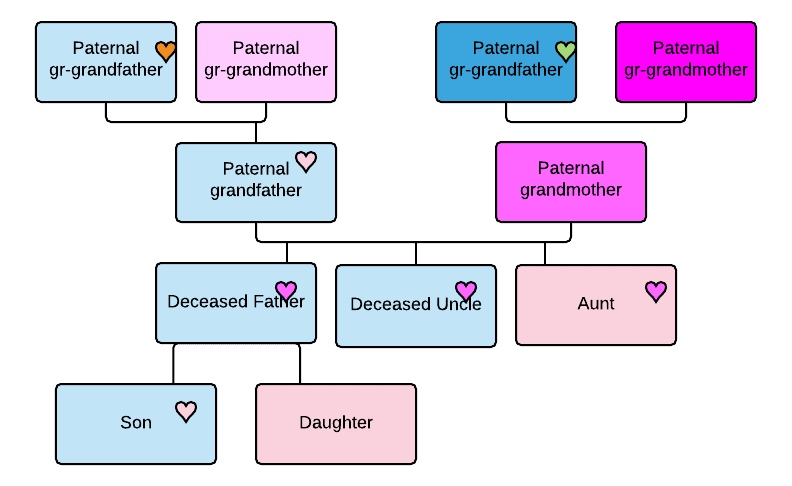
Y-DNA testing generally requires a person who has a Y chromosome. In many families, this means a man can test his own direct paternal line. A woman who wants to research that line may be able to ask a biological father, brother, paternal uncle, or another suitable male relative in the same direct paternal line to test.
Before choosing a relative, map the connection carefully. The person’s Y chromosome must come through the paternal line being investigated. For example, a brother may share the same biological father and paternal line, while a male cousin’s relevance depends on how he is related.
How Paternal Ancestry Tests Differ From Autosomal DNA Tests
Autosomal DNA tests examine DNA inherited from many branches of a person’s family. They can identify relatives from both the maternal and paternal sides, though it may take additional research to determine which side a match belongs to.
Y-DNA testing is narrower: it follows one direct paternal line. A person has many ancestors across generations, but a Y-DNA result reflects only the line passed from father to son. The two types of tests can complement each other, depending on the research question.
What a Paternal Ancestry Test Cannot Tell You
A paternal ancestry DNA test is not a complete family history. It usually cannot:
- Describe every ancestral branch in a family tree.
- Prove a particular nationality or cultural identity.
- Identify a specific ancestor without supporting records or other evidence.
- Determine legal parentage on its own.
- Guarantee that a genetic match is a close relative or identify the exact relationship.
Genetic results are estimates and are best considered alongside documents, family stories, and other evidence. Match databases also depend on who has tested, so a lack of close matches does not mean that useful relatives or information do not exist.
Paternal Ancestry Testing Is Not a Paternity Test
An ancestry test is designed to explore genetic heritage and family connections. It is not necessarily suitable for confirming whether a particular person is someone’s biological father. Paternity testing has different requirements, especially when results may be used in a legal or official setting. Anyone seeking a legally recognized result should check the applicable requirements and use an appropriately accredited testing provider.
Privacy and Family Considerations
DNA testing can reveal unexpected information, including previously unknown relatives or differences between family stories and genetic results. Before testing, review the provider’s policies on sample storage, data sharing, account deletion, and research participation. Consider how you would handle unexpected findings and whether you are comfortable contacting genetic matches.
Family members may have different views about sharing genetic information. It can help to discuss the test with relatives beforehand, especially if the results could affect people who have not chosen to participate.
How to Choose a Test
Start with the question you want to answer. If you are tracing a direct father-to-son line, look for a test that specifically analyzes Y-DNA and provides information about haplogroups and genetic matching. If you want a wider overview of ancestry and relatives from multiple family branches, an autosomal test may be more appropriate.
Compare the test’s coverage, matching features, reporting details, privacy practices, sample requirements, and costs. Results vary by provider, and a larger database may offer more opportunities for matches—but no database can guarantee a particular connection.
Frequently Asked Questions
Can a paternal ancestry test identify my surname?
It may help researchers investigate a surname when genetic matches and family records point in the same direction. A Y-DNA result alone does not prove that a particular surname belongs to a specific paternal line.
Can women research their paternal ancestry?
Yes. A woman can research her direct paternal line by asking an appropriate male relative from that line to take a Y-DNA test. She may also use autosomal DNA matches and historical records to learn about paternal relatives.
Does a haplogroup show exactly where my ancestors came from?
No. A haplogroup can provide broad clues about ancient population history, but it does not pinpoint a modern country or establish a person’s complete ancestry.
Will a test find relatives?
It may identify people who share relevant genetic markers and have also tested with the same provider or a compatible database. The number and closeness of matches depend on participation, the test used, and the family line being researched.
Using DNA as One Part of Family History Research
A paternal ancestry DNA test can be a helpful starting point for exploring a direct father-to-son line. Its strongest value often comes when genetic results are combined with family records, historical documents, and careful conversations with relatives. Knowing the test’s scope and limitations makes it easier to use the results thoughtfully and responsibly.
Paternal Ancestry DNA Tests: 6 Frequently Asked Questions
- What is a paternal ancestry DNA test, and how does it work?
- Who can take a Y-DNA test to trace a paternal line?
- Can a paternal ancestry DNA test identify my biological father?
- What can a Y-DNA haplogroup tell me about my paternal ancestry?
- How is a paternal ancestry DNA test different from an autosomal DNA test?
- How accurate are paternal ancestry DNA tests, and what are their limitations?
What is a paternal ancestry DNA test, and how does it work?
A paternal ancestry DNA test examines genetic markers inherited along a person’s direct father-to-son line, usually by analyzing the Y chromosome. Because the Y chromosome is generally passed from father to son with relatively few changes, the test can identify a Y-DNA haplogroup and compare results with other participants to find possible paternal-line relatives. These findings may offer clues about ancient ancestry and shared paternal ancestors, but they do not trace every branch of a family tree or pinpoint a person’s exact nationality.
Who can take a Y-DNA test to trace a paternal line?
A Y-DNA test is typically taken by someone with a Y chromosome, most often a biological male, to trace a direct father-to-son line. If you don’t have a Y chromosome, you may be able to ask a biological father, brother who shares your father, paternal uncle, or another male relative in the specific paternal line you want to research to test. Make sure the relative’s connection follows the same father-to-son line, since a Y-DNA result reflects only that branch of the family.
Can a paternal ancestry DNA test identify my biological father?
A paternal ancestry DNA test may help identify genetic relatives, but it is not designed to confirm who your biological father is. Y-DNA tests trace a direct father-to-son line, while other ancestry tests can show broader genetic matches; either may provide clues if your biological father or close relatives have also tested. For a more definitive answer, use a dedicated paternity test, and if the result may be needed for legal purposes, choose a test that follows the applicable legal testing and chain-of-custody requirements.
What can a Y-DNA haplogroup tell me about my paternal ancestry?
A Y-DNA haplogroup places your direct father-to-son line on a broad branch of the human family tree, based on genetic markers passed down through the Y chromosome. It can offer clues about the ancient origins and migration patterns associated with that line, but it represents only one branch of your ancestry. A haplogroup cannot identify a specific ancestor or prove a particular nationality, ethnicity, or modern country of origin; family records and other DNA results can provide helpful context.
How is a paternal ancestry DNA test different from an autosomal DNA test?
A paternal ancestry DNA test typically analyzes the Y chromosome, which is passed from father to son, to explore one direct paternal line. An autosomal DNA test examines DNA inherited from both parents and can reveal connections across many branches of your family tree. In short, Y-DNA testing focuses narrowly on a father-to-son lineage, while autosomal testing offers a broader view of ancestry and potential relatives on both sides of the family.
How accurate are paternal ancestry DNA tests, and what are their limitations?
Paternal ancestry DNA tests can accurately identify genetic markers on the Y chromosome and use them to estimate a person’s haplogroup or find potential paternal-line matches, but the results are clues rather than a complete family history. A Y-DNA test follows only one direct father-to-son line, so it does not represent all of a person’s ancestors or establish a specific nationality, ethnicity, or exact relationship on its own. Match availability depends on who else has tested, and relationship estimates can be uncertain. These ancestry tests also are not designed to establish legal paternity; that requires an appropriate paternity test.