
Hair DNA Testing for Genealogy: What You Can—and Can’t—Learn
Hair can seem like a convenient clue when researching family history. It may be preserved in a keepsake, found in an old brush, or passed down with a story about a relative. But having a strand of hair does not necessarily mean it can reveal someone’s ancestry. Whether hair is useful for genealogy depends on the sample’s condition, whether it includes a root, the type of DNA a laboratory can analyze, and the lab’s methods.
Why hair is a challenging DNA sample
Most consumer ancestry tests use cells collected with a cheek swab or saliva sample. These contain many cells with nuclear DNA—the genetic material inherited from both parents and commonly used to compare relatives and estimate ancestry.
A hair strand’s visible shaft is largely made of keratinized cells, which often contain little or no usable nuclear DNA. A strand with attached tissue at the root may contain more DNA-bearing cells, but the amount and quality vary. A root does not guarantee a successful test, and an old or poorly stored sample may be degraded or contaminated.
What kinds of DNA might be tested?
Depending on the sample and the laboratory, testing may involve different types of genetic material:
- Nuclear DNA is inherited from both parents. When enough suitable DNA is available, it can help identify biological relationships and may support family-tree research. It is generally more difficult to recover reliably from hair shafts without roots.
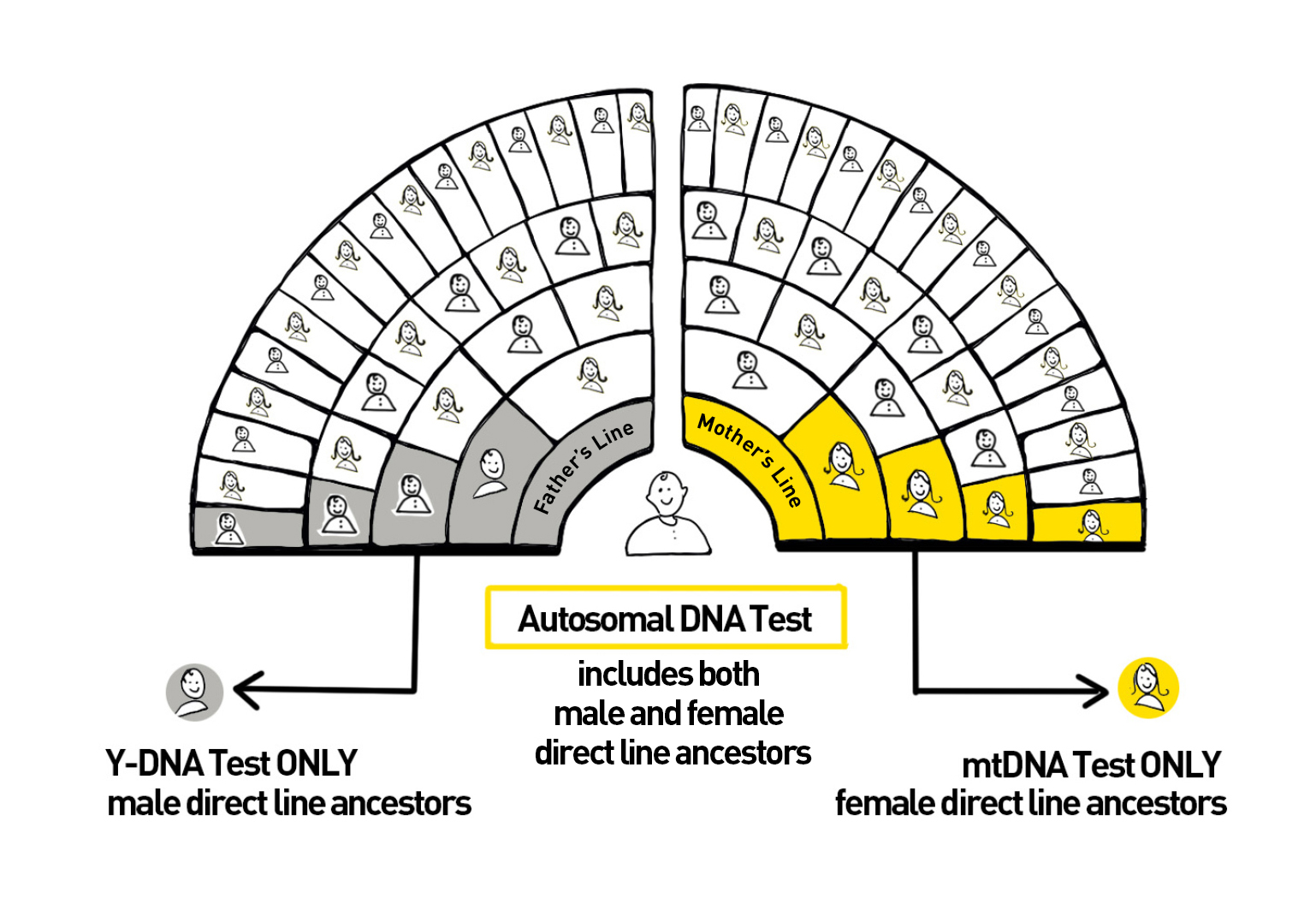
- Mitochondrial DNA (mtDNA) is found in many copies per cell and may sometimes be recovered from hair shafts. It follows a direct maternal line: a person’s mtDNA is inherited from their mother, who inherited it from her mother, and so on.
Because mtDNA traces only one narrow line of a family tree, it cannot describe a person’s full ancestry or identify every relative. People who share the same maternal line may have matching or very similar mtDNA, so a match usually cannot distinguish among close relatives on its own.
Can hair identify an ancestor?
Possibly, but the result depends on what question is being asked and what reference samples are available. A laboratory may be able to compare DNA from a historical hair sample with DNA from a living person or another sample. The strength of any conclusion depends on the type of DNA recovered, the relationship being tested, the quality of the samples, and the laboratory’s analysis.
Hair testing is not the same as a typical consumer ancestry test. Many genealogy services are designed for saliva or cheek-swab samples and may not accept hair. Specialized laboratories may offer testing of nonstandard or historical samples, but services and success rates vary. Contact a laboratory before sending anything, and ask what kind of hair it accepts and what conclusions the test can support.
Questions to ask a laboratory
- Do you test hair shafts, roots, or both?
- Which type of DNA do you analyze, and what genealogical question can it answer?
- What is the chance that this sample will yield a usable result?
- How should the sample be packaged and submitted?
- Will testing consume or damage part—or all—of the sample?
- How are results, genetic data, and any remaining material stored or disposed of?
- Can you explain the limits of the result and provide a written report?
Protecting a historical sample
If the hair may be historically or personally important, avoid unnecessary handling. Oils, skin cells, fibers, and DNA from people who have touched the sample can complicate testing. Keep it in its existing container if possible, note where it came from, and record its history without making claims that cannot be verified. Ask a qualified laboratory or conservator for guidance before cleaning, cutting, or repackaging it.
Consent and privacy matter
DNA can reveal sensitive information about the person who provided a sample and their biological relatives. Before testing hair believed to belong to someone else, consider that person’s consent, the rights and expectations of living family members, and applicable laws. Avoid sharing genetic results publicly without considering who could be affected. A laboratory’s privacy policy should explain how data and physical samples are handled.
Hair DNA is only one genealogy tool
For many family-history questions, records and documented relationships remain essential. Birth, marriage, and death records, census information, letters, photographs, and family interviews can provide context that DNA alone cannot. If suitable living relatives are willing to participate, standard cheek-swab or saliva testing may be more practical for building a broader picture of family relationships.
Hair DNA testing can sometimes contribute to genealogy, especially when a carefully preserved sample is connected to a clear research question. But results are not guaranteed, and a hair sample may reveal only a limited genetic line. Understanding the sample’s limitations—and working with a laboratory that explains them clearly—can help set realistic expectations and protect both the evidence and the people connected to it.
Understanding Hair DNA Testing for Genealogy: 8 Key Questions Answered
- Can hair be used for DNA testing for genealogy?
- Does hair need to have a root attached for DNA testing?
- What can mitochondrial DNA from a hair sample reveal about ancestry?
- Can hair DNA testing identify a specific ancestor or biological relative?
- How accurate is hair DNA testing for genealogy?
- How should a hair sample be stored before DNA testing?
- Do consumer ancestry testing companies accept hair samples?
- How much does genealogy DNA testing from hair cost?
Can hair be used for DNA testing for genealogy?
Yes, hair can sometimes be used for genealogy DNA testing, but success depends on the sample and the type of DNA a laboratory can recover. Hair with tissue attached at the root may contain nuclear DNA, which can help investigate biological relationships, while a hair shaft may sometimes provide mitochondrial DNA that traces only the direct maternal line. Results aren’t guaranteed, and many consumer ancestry services don’t accept hair samples. Contact a specialized lab before submitting a sample to confirm its requirements, likely limitations, and privacy practices.
Does hair need to have a root attached for DNA testing?
Not always, but a hair root can make DNA testing more likely to succeed. Cells attached to the root may provide nuclear DNA, which can be useful for identifying biological relationships. A hair shaft without a root may contain little usable nuclear DNA, though some specialized laboratories can sometimes analyze mitochondrial DNA from it. Results depend on the sample’s condition, how it was stored, and the lab’s methods, so check with the testing laboratory before submitting hair.
What can mitochondrial DNA from a hair sample reveal about ancestry?
Mitochondrial DNA (mtDNA) from a hair sample may provide clues about a person’s direct maternal line—the chain of mothers extending from that person through earlier generations. If enough usable DNA is recovered, a laboratory may compare it with reference data to identify a maternal haplogroup associated with deep ancestral origins, or compare it with another sample to assess whether the two may share a maternal-line ancestor. Because mtDNA represents just one branch of a family tree and can be shared by many people, it cannot reveal a person’s full ancestry or, by itself, identify a specific ancestor. Results also depend on the hair sample’s condition and the laboratory’s ability to recover DNA.
Can hair DNA testing identify a specific ancestor or biological relative?
Hair DNA testing may help assess whether a sample is related to a specific person, but it cannot identify an ancestor on its own. A reliable comparison requires usable DNA from the hair and a suitable reference sample from the suspected relative or their documented biological relatives. Hair with root tissue may sometimes provide nuclear DNA for broader relationship comparisons, while hair shafts may yield mitochondrial DNA, which traces only the direct maternal line and usually cannot distinguish among relatives who share that line. Results depend on sample quality and the laboratory’s methods, so ask a qualified lab whether it can test the sample and what conclusions its results can support.
How accurate is hair DNA testing for genealogy?
The accuracy of hair DNA testing for genealogy depends on the sample’s condition, whether it includes a root, the type of DNA a laboratory can recover, and the testing method used. Hair shafts often contain little usable nuclear DNA, while mitochondrial DNA may sometimes be recovered but traces only a person’s direct maternal line. As a result, testing may fail or provide more limited information than a standard saliva or cheek-swab test. Ask the laboratory what the results can establish, how reliable they are for your specific sample, and whether the test can identify a relationship or only indicate a broader maternal-line connection.
How should a hair sample be stored before DNA testing?
Store the hair sample in a clean, dry paper envelope or folded paper packet, and keep it in a cool, dry place away from direct sunlight, heat, and moisture. Avoid touching the strand or root with bare hands; handle it with clean gloves or tweezers, and don’t wash, tape, or place it in plastic, which can trap moisture. Label the packaging with the sample’s source and collection date, and contact the testing laboratory before mailing it, since handling and packaging requirements can vary.
Do consumer ancestry testing companies accept hair samples?
Most consumer ancestry testing companies do not accept hair samples. Their kits are designed for saliva or cheek-swab samples, which provide the type and amount of DNA their testing process requires. Hair—especially a strand without an attached root—may not contain enough usable DNA, and specialized testing can be costly or inconclusive. Check the company’s current sample requirements before sending anything; a laboratory that handles forensic or historical DNA may offer different options.
How much does genealogy DNA testing from hair cost?
The cost of genealogy DNA testing from hair varies by laboratory, sample condition, and the type of analysis available. Testing a hair sample may require specialized processing, so it can cost more than a standard consumer ancestry test—and some ancestry companies do not accept hair at all. Before sending a sample, ask the lab for a complete price that includes sample evaluation, testing, and any follow-up analysis, and confirm whether the fee is refundable if the sample does not yield usable DNA.