
How a Y-DNA Test Can Help Build Your Family Tree
Building a family tree often begins with names, dates, family stories, and historical records. DNA testing can add another kind of evidence. A Y-DNA test looks at genetic markers on the Y chromosome and may help investigate a person’s direct paternal line—the line connecting a father to his father, and so on.
What Is Y-DNA?
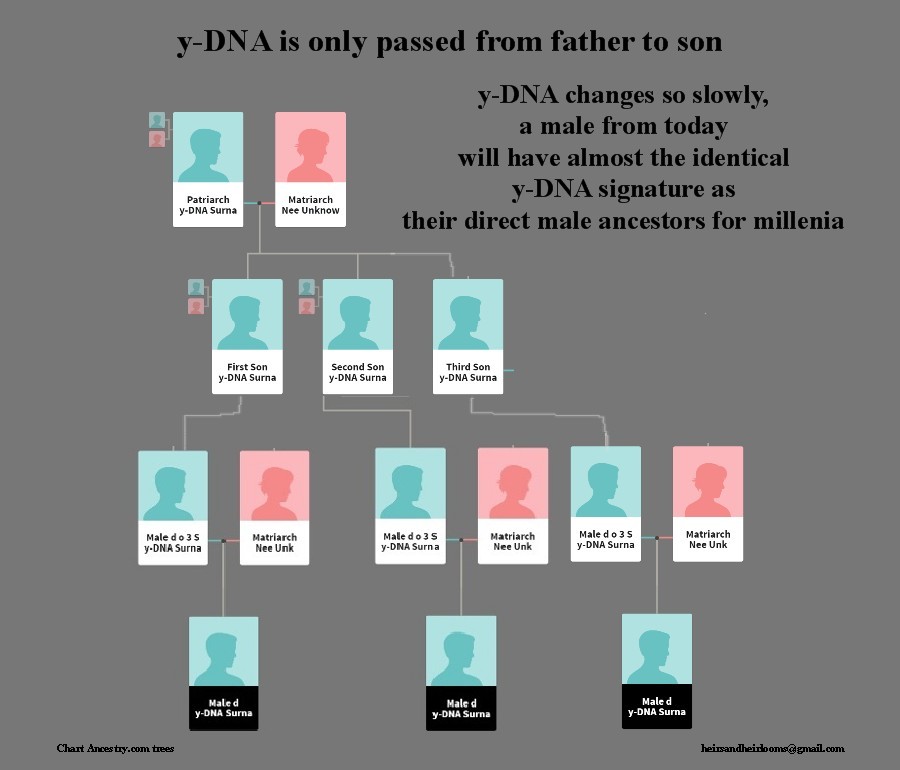
The Y chromosome is typically passed from a biological father to a son. Because it changes relatively slowly over generations, many markers can remain similar among men who share a paternal-line ancestor. A Y-DNA test compares selected markers or sequences to identify patterns and potential genetic matches.
Most people have either one or two X chromosomes and do not have a Y chromosome. As a result, Y-DNA testing is generally available to people with a Y chromosome. Someone researching a paternal line can ask a suitable male relative—such as a brother, father, paternal uncle, or male cousin from that line—to test.
What Can Y-DNA Tell You About a Family Tree?
Y-DNA results can support research into a direct paternal line in several ways:
- Identify possible paternal-line relatives: A close match may share a paternal-line ancestor with the tester, although the relationship and the ancestor’s location in the family tree require further investigation.
- Explore a surname line: In some cultures, surnames have traditionally passed from father to son. Y-DNA matches may offer clues about whether two people with the same or different surnames share a paternal ancestor.
- Investigate uncertain or incomplete records: Genetic matches may help guide research when documents are missing, conflicting, or difficult to locate.
- Learn about deep paternal ancestry: Y-DNA can identify a paternal haplogroup, a branch on the human family tree that reflects ancient shared ancestry.
Understanding Matches and Haplogroups
A Y-DNA match means that two testers have similar results at the markers or sequence levels compared by a testing service. The closer the match, the more useful it may be for genealogical research, but a match is not proof of a specific relationship. The likely time to a shared ancestor depends on the test type, the number of differences, the family histories involved, and the size of the available comparison database.
A haplogroup is a broad paternal-line category defined by genetic variations that arose over time. It can provide information about ancient population history and migration, but it usually cannot identify a recent ancestor by itself. A haplogroup is not the same as an ethnicity estimate, and it does not describe a person’s complete ancestry.
Y-DNA Covers Only One Branch of Your Ancestry
Every person has many ancestors, but Y-DNA represents only one narrow branch of a family tree: the direct paternal line. For example, it can follow a person’s father, paternal grandfather, paternal great-grandfather, and earlier paternal ancestors. It does not directly provide information about all the other branches, such as a mother’s ancestry or the paternal grandmother’s family.
For a fuller picture, researchers may combine Y-DNA with autosomal DNA testing, historical records, family documents, and oral history. Autosomal DNA is inherited from many branches of a person’s recent family tree, while Y-DNA focuses specifically on the paternal line.
How to Use Y-DNA Results in Genealogy Research
- Document the line you are researching. Write down what is known about the direct paternal ancestors, including names, dates, locations, and sources.
- Choose a tester from that line. If the researcher does not have a Y chromosome, a male relative who descends through an unbroken father-to-son line may be able to test.
- Compare results with documented family trees. Look for shared places, surnames, and time periods, while treating any proposed connection as a hypothesis to verify.
- Contact matches thoughtfully. A respectful message explaining the shared match and asking about relevant ancestors may help both researchers compare information.
- Confirm findings with evidence. Use records such as birth, marriage, death, census, probate, land, and church documents whenever possible.
Important Limitations and Privacy Considerations
DNA results can raise unexpected questions about biological relationships, family stories, or parentage. A genetic match may reveal information that affects more than the person who tested. Before ordering a test, consider how results will be stored, who can view them, whether the service allows data deletion, and whether matching features can be turned off.
Testing companies use different databases and matching methods, so results from one service may not be directly comparable with those from another. A lack of matches does not mean that a paternal line cannot be researched; it may simply mean that close relatives have not tested or that the relevant people are not included in that database.
Y-DNA testing is best treated as one source of evidence—not a replacement for careful genealogical research. Used thoughtfully alongside records and family knowledge, it can offer valuable clues and help researchers explore the paternal branches of their family trees.
Unlocking Ancestry: 6 Benefits of Y-DNA Testing for Family Trees
- Can help identify paternal-line relatives.
- May reveal shared ancestors with DNA matches.
- Can support research when records are missing.
- May offer clues about surname history.
- Can show a paternal haplogroup.
- Adds genetic evidence to family tree research.
6 Drawbacks of Y-DNA Testing for Family Trees: Privacy, Limitations, and More
- Y-DNA traces only the direct paternal line.
- Most people need a male relative to take the test.
- Results may not identify a specific ancestor.
- Few database matches can limit usefulness.
- Unexpected findings may affect family relationships.
- DNA data may raise privacy concerns.
Can help identify paternal-line relatives.
A family tree Y-DNA test can help identify potential relatives along a person’s direct paternal line—the chain of fathers, grandfathers, and earlier male ancestors. By comparing Y-DNA results with those of other testers, it may reveal shared genetic patterns that point to a common paternal ancestor. These matches can offer useful leads for family tree research, especially when records are limited, though documentary evidence is still needed to confirm specific relationships.
May reveal shared ancestors with DNA matches.
A family tree Y-DNA test may reveal shared paternal-line ancestors by connecting you with people who have similar Y-DNA results. Comparing matches’ family trees, surnames, and ancestral locations can offer useful clues about where your paternal lines may intersect. These matches are starting points for research, not proof of a specific relationship, so it’s best to confirm possible connections with historical records and other evidence.
Can support research when records are missing.
A Y-DNA test can help support family-tree research when records are missing, damaged, or difficult to find. By comparing Y-DNA results with those of other testers, researchers may discover paternal-line matches and clues about shared ancestors, surnames, or locations. These genetic connections can suggest new directions for investigation, but they should be treated as leads and checked against any available family records and other evidence.
May offer clues about surname history.
A family tree Y-DNA test may offer clues about surname history by comparing paternal-line DNA with results from other testers. Because Y-DNA is typically passed from father to son, matches may help researchers explore whether people with the same surname—or different surnames—share a paternal ancestor. These genetic clues can point to useful records or family lines to investigate, though they should be treated as leads rather than proof of a specific surname origin or relationship.
Can show a paternal haplogroup.
A family tree Y-DNA test can reveal a paternal haplogroup—a broad genetic branch tracing your direct father-to-father line through generations. This can offer a glimpse into your paternal ancestors’ deep origins and how that line fits into the wider history of human migration. While a haplogroup usually cannot identify a recent ancestor or specific location on its own, it can add useful context to family-tree research.
Adds genetic evidence to family tree research.
A Y-DNA test adds genetic evidence to family tree research by helping people compare paternal-line DNA with potential relatives. These matches can offer clues about shared ancestors, surname connections, or family branches that are difficult to trace through records alone. When combined with historical documents and family stories, Y-DNA results can help researchers build a more complete and evidence-based picture of their paternal ancestry.
Y-DNA traces only the direct paternal line.
One limitation of a Y-DNA test is that it traces only one narrow branch of a family tree: the direct paternal line, passed from father to son. It does not reveal ancestry from a person’s mother or from other branches, such as a paternal grandmother’s family. As a result, Y-DNA can offer useful clues about paternal ancestors, but it cannot provide a complete picture of someone’s family history.
Most people need a male relative to take the test.
One limitation of Y-DNA testing is that most people need a male relative from the paternal line to take the test. Because Y-DNA is typically passed from father to son, someone without a Y chromosome may need to ask a father, brother, paternal uncle, or other male relative who descends through an unbroken father-to-son line. If no suitable relative is available or willing to participate, researching that branch with Y-DNA may not be possible.
Results may not identify a specific ancestor.
A Y-DNA test can reveal paternal-line matches and broader ancestry clues, but it may not identify a specific ancestor. Results typically show that two people may share a paternal-line ancestor without pinpointing who that person was, when they lived, or where they fit in the family tree. Identifying the connection usually requires comparing DNA results with family histories and reliable historical records.
Few database matches can limit usefulness.
A Y-DNA test is most useful when it finds relevant people to compare, so a small number of database matches can limit what you learn. If few people from the paternal line—or from the regions and family groups connected to it—have tested, results may offer little help identifying shared ancestors or narrowing down relationships. A lack of matches does not mean the test is inaccurate; it may simply reflect limited participation in the database. As more people test over time, new matches may appear.
Unexpected findings may affect family relationships.
A family tree Y-DNA test can uncover unexpected information about biological relationships, ancestry, or family stories. These findings may raise sensitive questions about paternity or shared ancestry and could affect trust and relationships among relatives. Before testing, consider how you and your family might respond to unexpected results, and discuss privacy and sharing preferences with anyone who may be affected.
DNA data may raise privacy concerns.
One potential drawback of using Y-DNA to research a family tree is that genetic data can raise privacy concerns. Test results may reveal sensitive information about biological relationships or family history, and sharing them with a testing service or relatives can affect more people than the person who tested. Before submitting a sample, review the company’s privacy policy, understand how data may be stored or shared, and check whether you can limit matching or request deletion of your information.