
How to Get Your DNA Tested
Getting a DNA test can help answer questions about ancestry, family relationships, or certain health risks. The right test depends on what you want to learn. Before ordering a kit or providing a sample, decide what question you need answered and how you plan to use the results.
Choose the Right Type of DNA Test
- Ancestry testing: Consumer tests may estimate your ancestral origins and identify genetic relatives who have also tested with the same company. Estimates can vary between providers and may change as databases and methods are updated.
- Relationship testing: DNA tests can assess biological relationships, such as whether two people are parent and child, siblings, or other relatives. For a parentage question, ask whether the test is for personal information or for legal use.
- Health-related testing: Some tests look for genetic variants associated with inherited conditions or health risks. A consumer result is not a diagnosis. Consider discussing health testing with a doctor or genetic counselor, especially before making medical decisions.
Decide Whether You Need a Legal DNA Test
If the results may be used in a court case, child support matter, birth-certificate application, or another official process, do not assume a home test will be accepted. Legal testing generally requires verified identification and documented sample handling, often called a chain of custody. Ask the agency, court, or attorney involved what testing procedure and laboratory it requires before arranging a test.
For personal knowledge, a home cheek-swab test may be sufficient. However, a result from a personal test may not meet legal requirements.
How the Testing Process Works
- Select a reputable provider. Review the test’s purpose, laboratory information, privacy terms, costs, and instructions for interpreting results.
- Read the consent and privacy information. Find out how your sample and genetic data will be stored, used, shared, and deleted. Check whether you can opt out of research or relative-matching features.
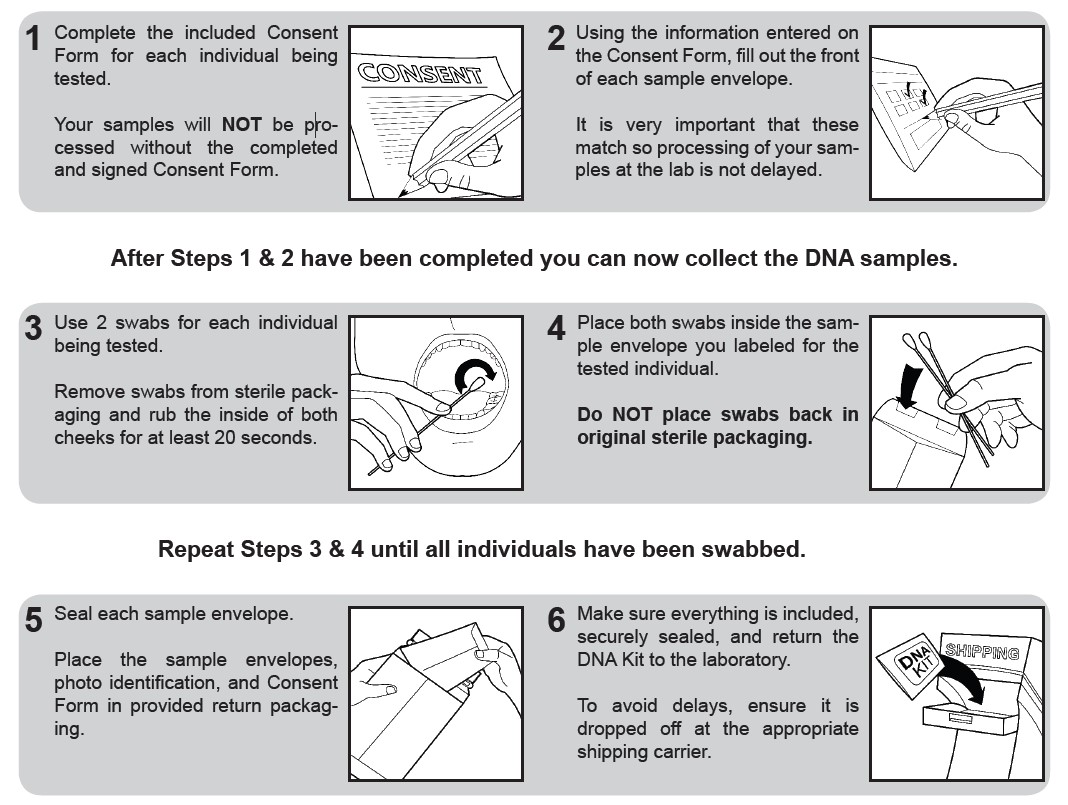
- Provide a sample. Most home tests use a cheek swab or saliva sample. Follow the instructions carefully; eating, drinking, or brushing your teeth shortly before collection may affect some kits.
- Return the sample. Use the packaging and mailing instructions provided. Legal tests may require collection by an approved professional.
- Review the results thoughtfully. Results can raise unexpected questions about relatives, family history, or health. Consider professional guidance when the findings could affect medical care or legal decisions.
Questions to Ask Before You Order
- What specific question will this test answer?
- Is the test intended for personal, medical, or legal use?
- Who processes the sample, and what quality standards does the laboratory follow?
- How will the company protect my genetic information?
- Can my data be used for research or shared with other organizations?
- Can I request deletion of my sample and data?
- What support is available if the results are unexpected?
Understand the Limits and Privacy Considerations
DNA results are powerful and personal. A test may reveal information about biological relatives that family members did not expect to learn. Genetic data can also provide information about your relatives, not just about you. Review the provider’s policies before testing, and avoid treating ancestry estimates or health-risk reports as complete or definitive answers.
If you are testing a child or another person, make sure you have the legal authority and any required consent. For a minor, consider the child’s privacy and best interests, as well as the rules that apply to the type of test and how the results may be used.
Getting Started
To get your DNA tested, first identify your goal: ancestry, a family relationship, or health information. Then choose a test designed for that purpose, confirm whether the results need to meet legal or medical requirements, and review the provider’s privacy practices before sending a sample. When the stakes are significant, consult a qualified professional before testing or acting on the results.
7 Essential Tips for Getting Your DNA Tested
- Decide whether you want ancestry, health, or both.
- Compare test accuracy, cost, and features.
- Read the company’s privacy and data-sharing policies.
- Check whether you can delete your sample and results.
- Consider how unexpected family findings might affect you.
- Use a certified clinical test for medical decisions.
- Follow the kit instructions carefully when collecting your sample.
Decide whether you want ancestry, health, or both.
Before ordering a DNA test, decide whether you’re interested in learning about your ancestry, exploring potential health-related genetic information, or both. An ancestry test may estimate where your ancestors came from and help identify genetic relatives, while a health test may report genetic variants associated with certain conditions or traits. Some services offer both, but the tests, privacy policies, and limitations can differ. Clarifying your goal can help you choose a test that fits your needs and understand what its results can—and can’t—tell you.
Compare test accuracy, cost, and features.
Before you order a DNA test, compare providers’ accuracy claims, total costs, and features to find one that fits your needs. Check what the test can—and cannot—tell you, whether shipping or follow-up services cost extra, and if features such as relative matching, health reports, or ancestry estimates are included. For legal or medical decisions, confirm that the test and laboratory meet the relevant requirements rather than relying on a general consumer test.
Read the company’s privacy and data-sharing policies.
Before you get your DNA tested, read the company’s privacy and data-sharing policies carefully. Find out how your sample and genetic information will be stored, who may access it, whether it can be shared with researchers or other organizations, and whether you can opt out of data sharing or request deletion. Because genetic information can reveal details about you and your relatives, choose a provider whose practices you understand and feel comfortable with.
Check whether you can delete your sample and results.
Before choosing a DNA testing service, check whether you can request deletion of both your stored sample and genetic results. Providers’ policies differ: some let you delete data through your account, while others may retain certain records or require a separate request. Review the privacy terms so you understand what will be removed, what may be kept, and whether information already shared with research partners can be recalled.
Consider how unexpected family findings might affect you.
Before you get your DNA tested, consider how unexpected family findings might affect you and your loved ones. Results could reveal unknown relatives, unexpected parentage, or family information that differs from what you’ve been told. Think about whether you feel ready to learn this information, how you might respond, and whether you want support from a trusted person or a qualified counselor.
Use a certified clinical test for medical decisions.
If you’re considering DNA testing to guide a medical decision, choose a test performed or reviewed by a qualified healthcare professional and processed by a certified clinical laboratory. Consumer DNA tests may provide useful clues, but they aren’t a substitute for clinical testing or medical advice. Talk with your doctor or a genetic counselor about which test is appropriate and how to interpret the results before changing your care.
Follow the kit instructions carefully when collecting your sample.
Follow the test kit instructions carefully when collecting your DNA sample. Steps such as washing your hands, avoiding food or drink before testing, and using the swab or collection tube correctly can help prevent contamination and ensure the lab receives a usable sample. If anything is unclear, check the kit’s guidance or contact the provider before sending it back.